Maa Durga – The Divine Mother of Power and Protection
Introduction
Maa Durga, the supreme goddess of strength and protection, is one of the most revered deities in Hinduism. Known as the embodiment of Shakti (divine feminine energy), she symbolizes the victory of good over evil. Worshipped especially during Navratri and Durga Puja, Maa Durga inspires her devotees to fight challenges in life with courage, faith, and righteousness.
The Mythological Background of Maa Durga
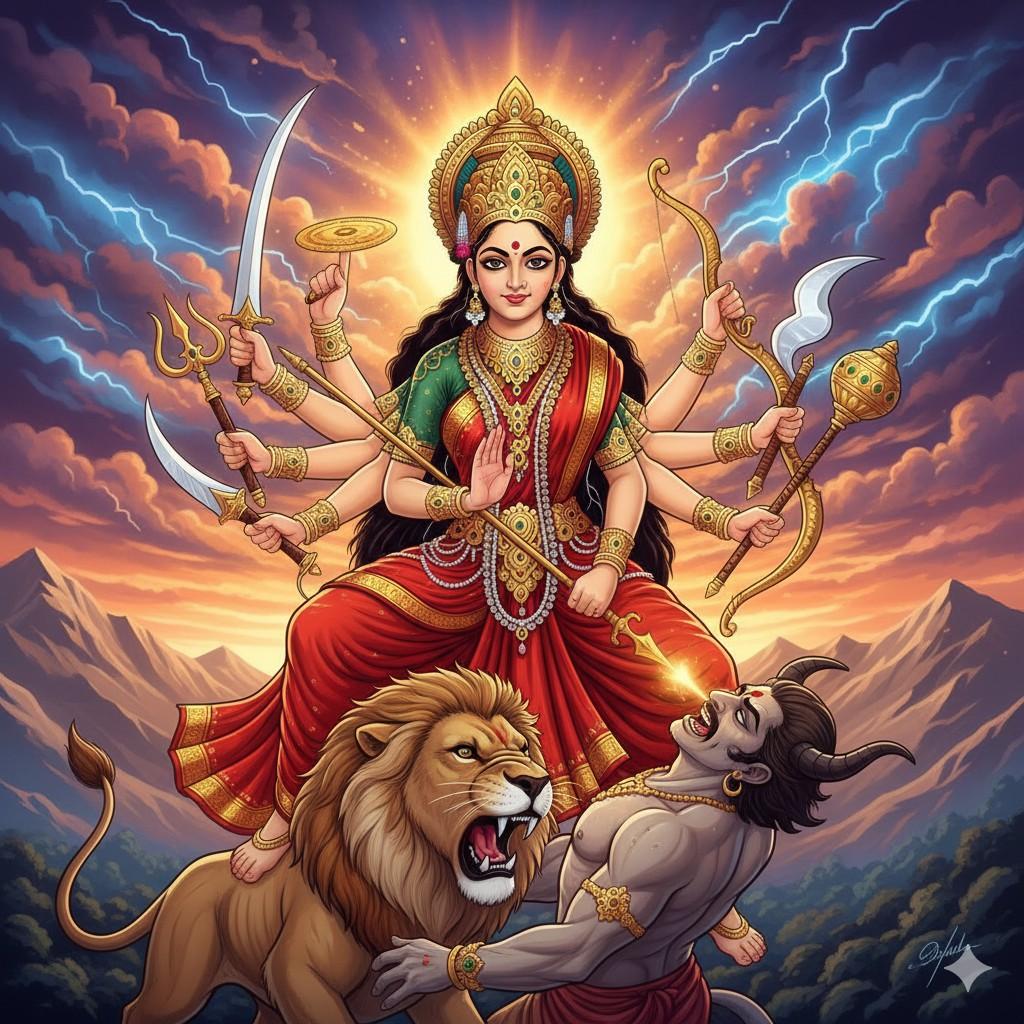
According to ancient scriptures like the Devi Mahatmya and Durga Saptashati, Maa Durga was created by the combined energies of Lord Brahma, Vishnu, and Maheshwara when the demon king Mahishasura threatened the universe.
-
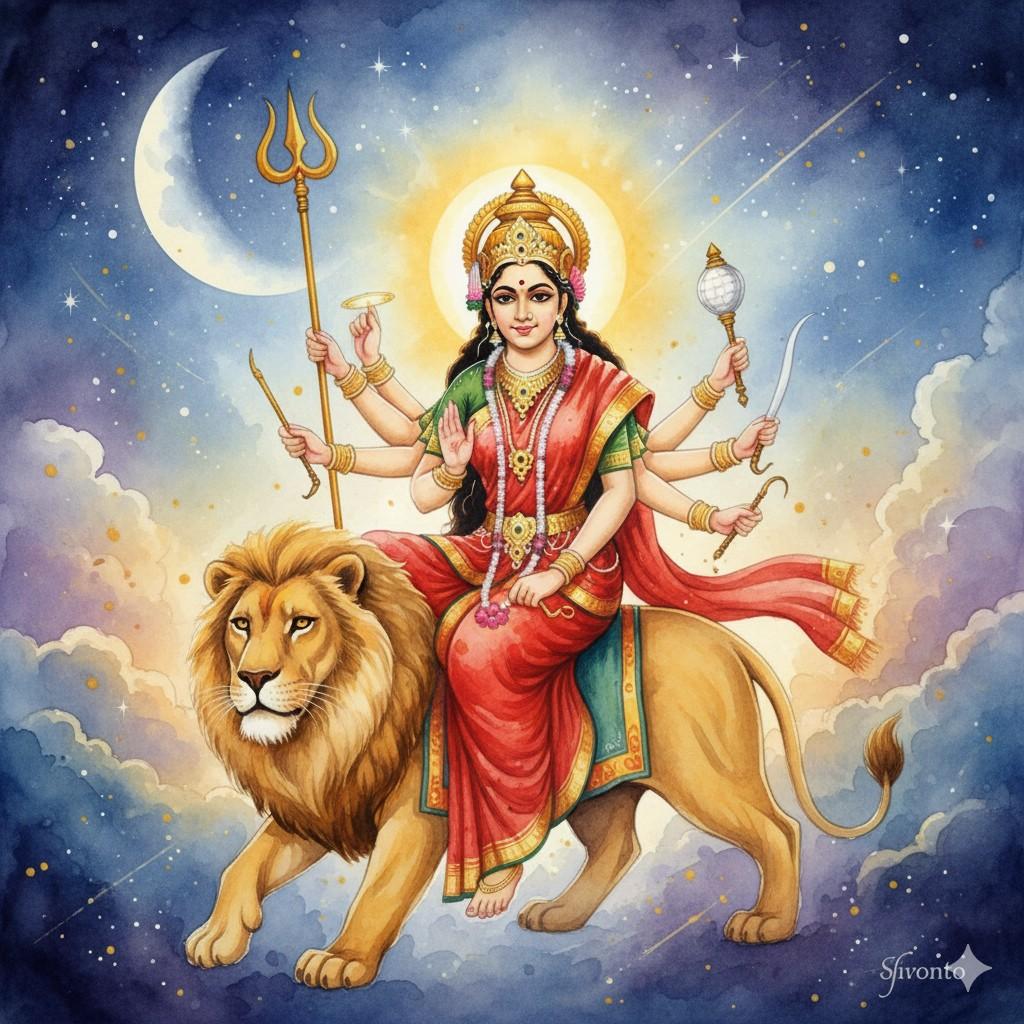
She emerged as a radiant goddess riding a lion, armed with celestial weapons gifted by different gods.
-
In the epic battle, Maa Durga fought Mahishasura for nine nights and finally defeated him on the tenth day, celebrated as Vijayadashami (Dussehra).
-
This story represents the eternal truth that righteousness always triumphs over evil.
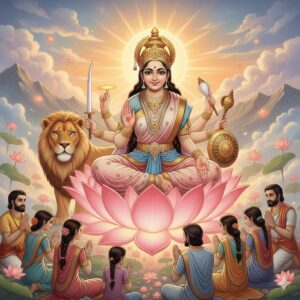
The Symbolism of Maa Durga’s Form
Every aspect of Maa Durga’s appearance holds deep spiritual meaning:
-
Ten Arms: Represent her ability to protect devotees from all directions.
-
Weapons: Each weapon symbolizes the destruction of negative traits like greed, anger, jealousy, and pride.
-
Lion/Tiger as her vehicle: Symbol of power, determination, and will.
-
Trident (Trishul): Represents the three qualities – Satva (wisdom), Rajas (action), and Tamas (inertia).
-
Lotus: Symbol of spiritual awakening amidst worldly struggles.
Navratri and Durga Puja – Festivals of Devotion
-
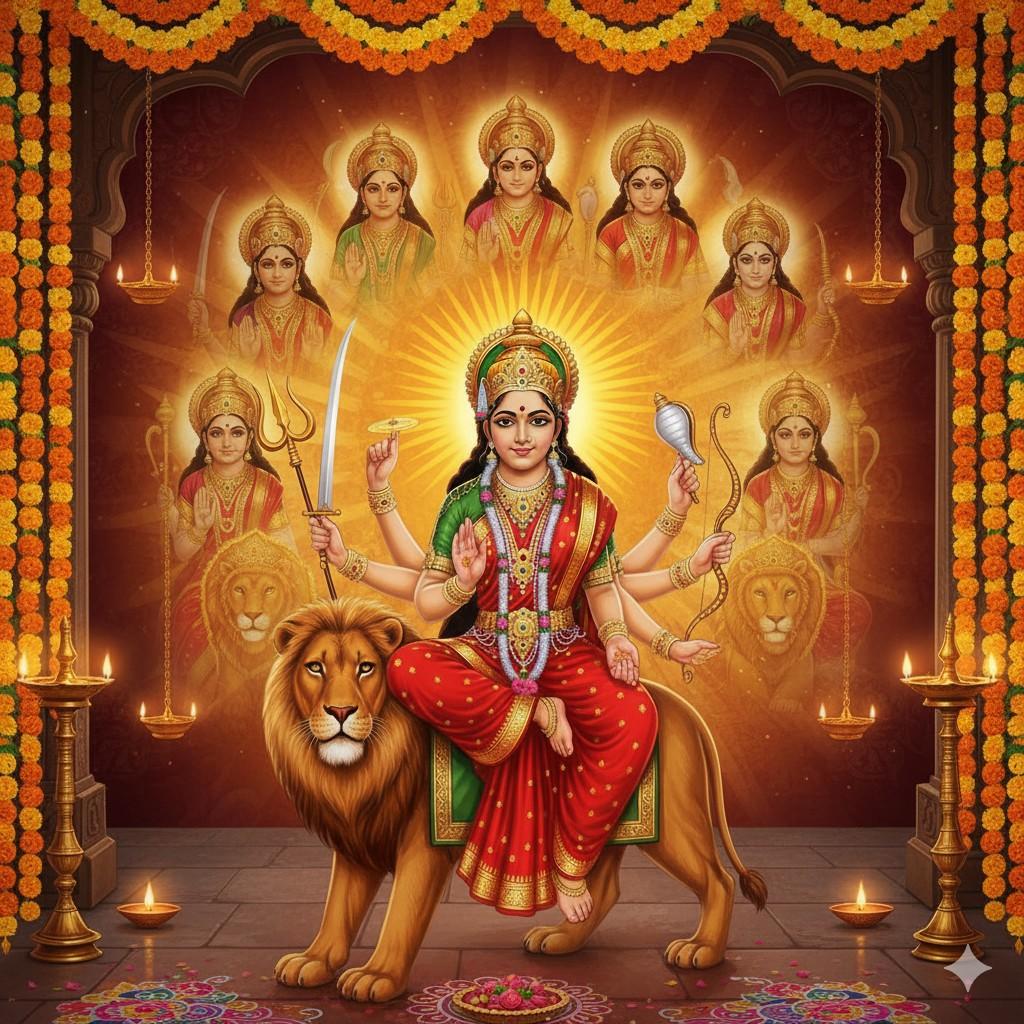
Navratri (Nine Nights): Celebrated across India with fasting, prayers, dance (Garba and Dandiya in Gujarat), and devotion. Each day is dedicated to a different form of the goddess, from Shailaputri to Siddhidatri.
-
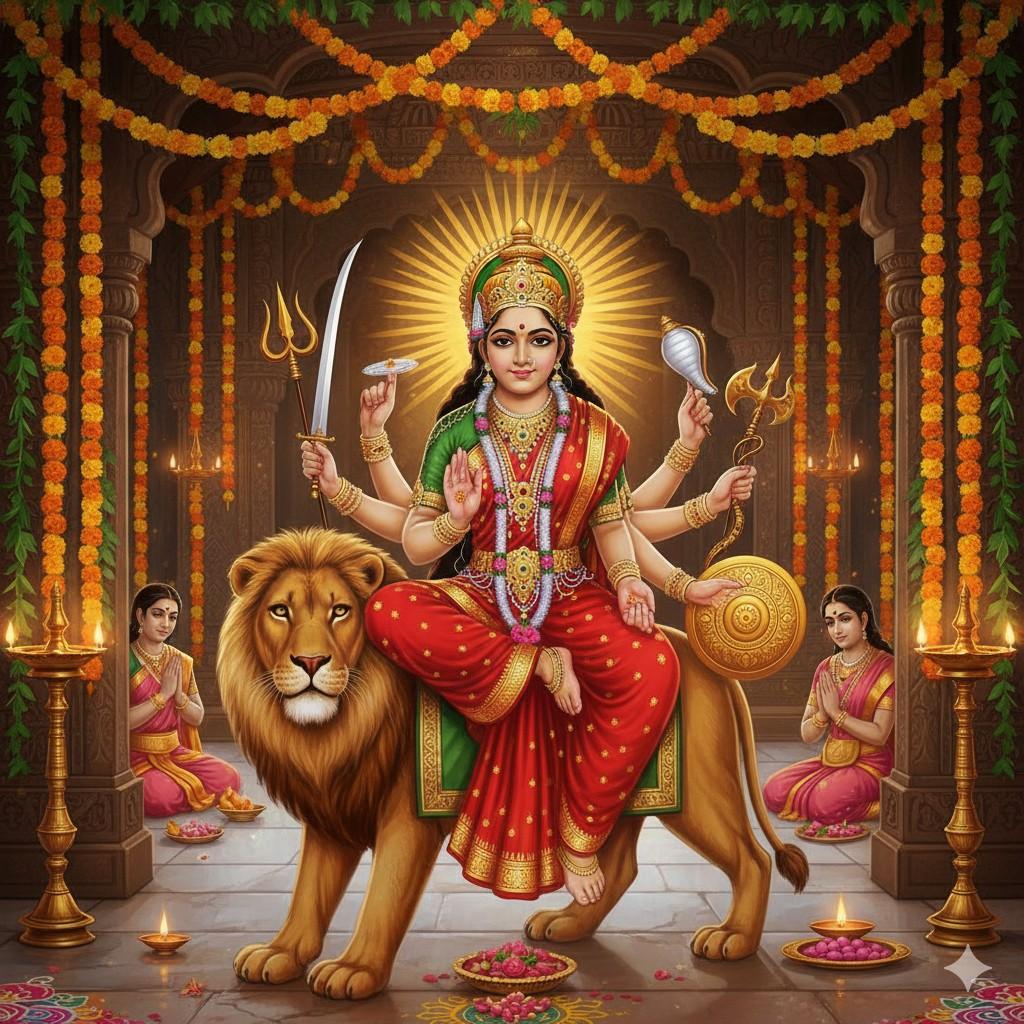
Durga Puja (West Bengal, Odisha, Assam): A grand festival where artistic idols of Maa Durga are worshipped for five days, accompanied by cultural performances, rituals, and processions.
-
The celebrations reflect unity, devotion, and the cultural richness of India.
Spiritual Significance of Maa Durga
Maa Durga is more than just a warrior goddess; she represents:
-
Courage to fight life’s battles.
-
Inner strength to overcome fear, doubt, and negativity.
-
Compassion and motherhood, guiding devotees like her own children.
-
Balance of life, teaching us to stay grounded in success and hopeful in difficulties.
Maa Durga in Art, Music, and Culture
Her presence is deeply woven into Indian traditions:
-
Classical dances like Durga Stuti Nritya depict her power.
-
Devotional songs (Durga Chalisa, Aarti, Bhajans) are sung to invoke her blessings.
-
Artists create magnificent Durga idols and paintings, celebrating her divine beauty.
-
Literature and scriptures praise her as the Mahishasura Mardini – the slayer of Mahishasura.
Conclusion
Maa Durga is not just a goddess; she is the eternal mother, protector, and guiding force for her devotees. She inspires us to rise above difficulties, conquer negativity, and live with strength and compassion. As we bow before her during Navratri and Durga Puja, may her blessings bring peace, prosperity, and courage into our lives.
FAQs on Maa Durga
Q1. Why is Maa Durga worshipped for nine days during Navratri?
Each day represents one of her nine forms, collectively known as Navadurga.
Q2. What does Maa Durga symbolize?
She symbolizes power, protection, righteousness, and victory of good over evil.
Q3. Why is Maa Durga shown riding a lion or tiger?
It represents unlimited power and the courage to control even the most ferocious forces.
Q4. When is Durga Puja celebrated?
It is celebrated during the Sharad Navratri, usually in September–October, with great devotion in West Bengal, Odisha, Assam, and other parts of India.
✨ Chant with devotion:
“Ya Devi Sarva Bhuteshu, Shakti Rupena Samsthita,
Namastasyai Namastasyai Namastasyai Namo Namah.”